



Add as Preferred Source on Google
Apple on Monday introduced Siri AI, the most significant overhaul of its voice assistant since its debut more than a decade ago, as the company seeks to strengthen its position in the rapidly evolving artificial intelligence race.
The new system, unveiled during Apple's Worldwide Developers Conference, is designed to move beyond the traditional role of a digital assistant. Instead of merely answering questions, Siri AI is intended to understand personal context, interact across applications and perform complex tasks on behalf of users.
Apple executives argued that the company's approach differs from that of many rivals by placing privacy and device integration at the center of its strategy.
“Some companies appear to be pursuing AI for the sake of AI,” Craig Federighi, Apple's senior vice president of software engineering, said during the presentation. “Our focus is on creating experiences that are genuinely useful to people.”
A More Personal Assistant
The new Siri is designed to access information stored across a user's Apple ecosystem, including messages, emails, photos and documents. During demonstrations, Apple showed Siri retrieving appointment details from conversations, locating reservation codes buried in email threads and organizing information spread across multiple apps.
The assistant will also be able to carry out actions within applications, creating reminders, updating calendars and automating workflows through natural language commands.
Apple said the goal is to transform Siri from a reactive tool into a proactive assistant capable of understanding both context and intent.
AI Comes to the Camera
Among the most ambitious additions are new visual intelligence features tied closely to the camera and photo library.
Apple demonstrated Siri analyzing images to provide nutritional information about meals, evaluating whether a backpack complies with airline carry-on requirements and helping users divide expenses from photographed receipts.
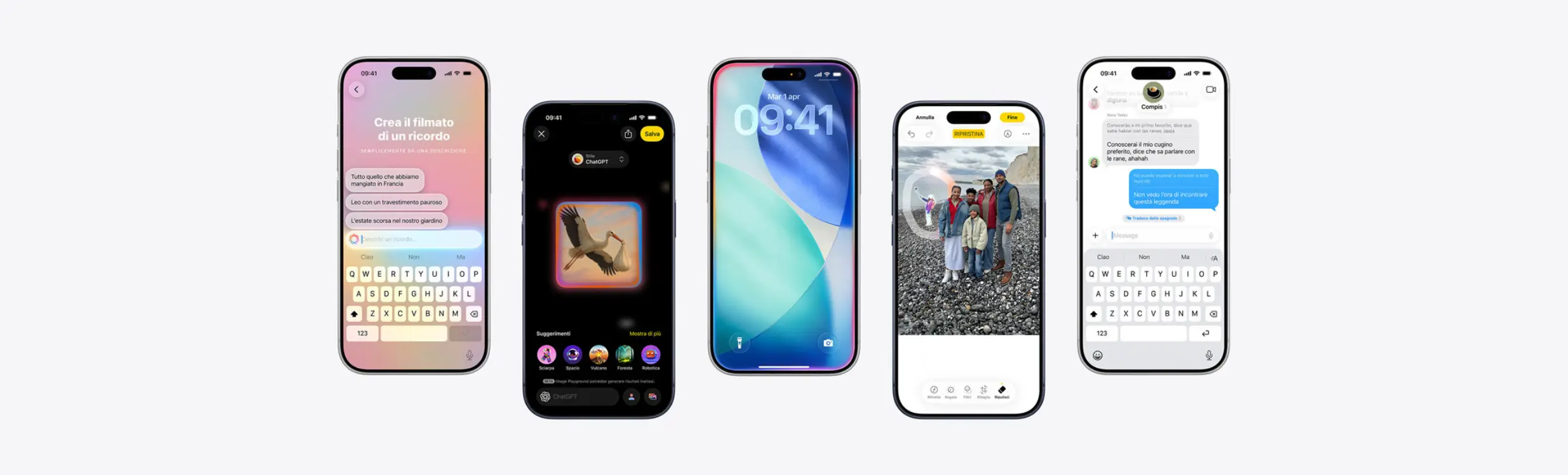
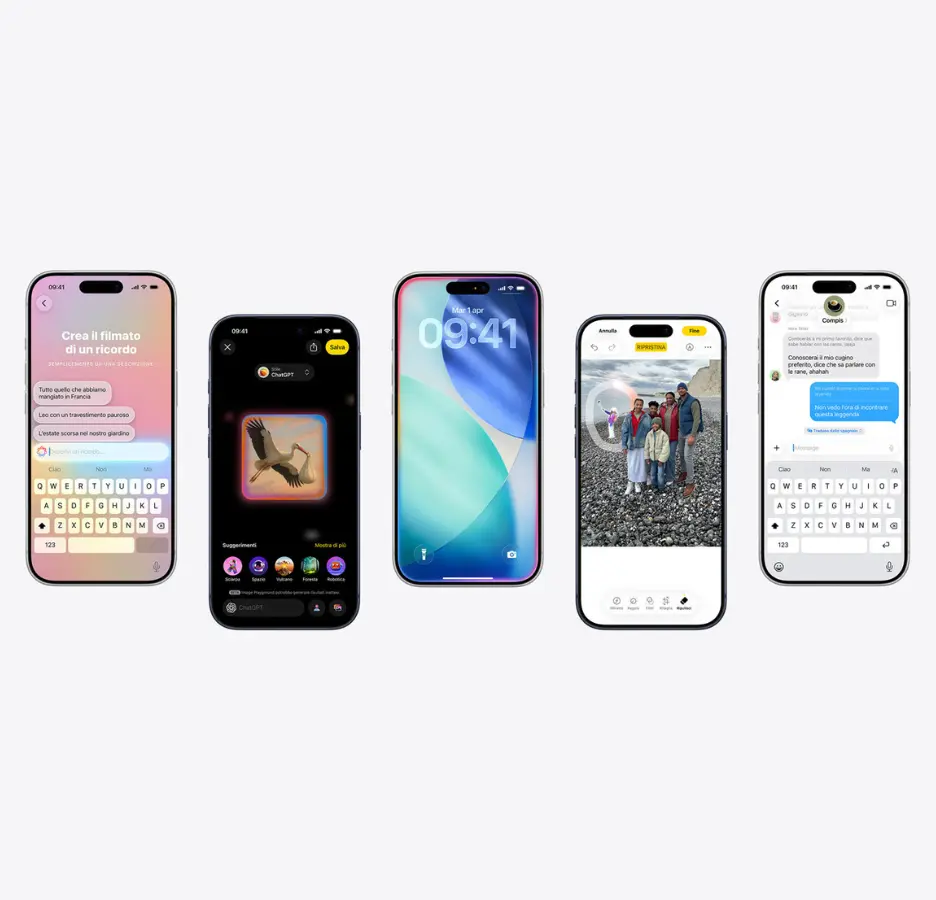
A new feature called Spatial Reframing allows users to alter the composition of photographs after they have been taken. Using generative AI models, the system can reconstruct portions of an image to create the impression that the photo was captured from a different perspective.
The Photos app is also receiving expanded editing capabilities. A tool called Extend can enlarge images beyond their original boundaries, while an upgraded Clean Up feature removes unwanted objects with greater realism.
Intelligence Across Apple's Ecosystem
The company's AI strategy extends far beyond Siri itself.
Safari will gain the ability to organize browser tabs automatically by topic and monitor web pages for changes, notifying users when prices drop or products return to stock.
The Passwords app will be able to update compromised credentials automatically, navigating websites and replacing weak passwords with stronger alternatives.
In the Home app, Apple Intelligence will generate summaries of security camera footage and allow users to search video clips using natural language descriptions.
Apple also introduced tools that simplify the creation of Shortcuts, its automation platform. Users will be able to describe a task in plain language, and the system will assemble the required workflow automatically.
Privacy as a Competitive Advantage
Throughout the presentation, Apple repeatedly emphasized privacy as a defining feature of its AI platform.
The company's architecture combines on-device processing with a cloud-based system known as Private Cloud Compute. Apple says the infrastructure allows more advanced AI operations to be performed without storing personal data or making it accessible to Apple itself.
Executives stressed that user information is not used to train the company's foundation models and that independent researchers will be able to verify the security guarantees of the system.
Underlying the platform is a new family of Apple Foundation Models, developed in collaboration with Google and incorporating technology related to Google's Gemini models. Apple said the models are optimized to run both on Apple silicon and, for the most demanding workloads, on cloud infrastructure using Nvidia hardware.
Europe Left Waiting
Despite the broad rollout planned for later this year, Apple said Siri AI will not initially be available on iPhones and iPads in the European Union.
The company blamed regulatory complications stemming from the European Union's Digital Markets Act, arguing that current requirements could force Apple to provide third-party AI systems with access to sensitive user data and device controls without sufficient safeguards.
Apple said it had proposed several alternatives to regulators, including a framework called Trusted System Agent, but none were accepted.
As a result, when iOS 27 and iPadOS 27 launch later this year, European users will not have access to Siri AI or many of its most advanced features. The company said the technology will, however, be available in the European Union on macOS 27 and visionOS 27.
“We are deeply disappointed that our users in the European Union will not be able to use Siri AI on iPhone and iPad at launch,” Federighi said.
A Critical Moment for Apple
The unveiling comes after years of criticism that Apple had fallen behind competitors such as OpenAI, Google and Anthropic in the development of generative artificial intelligence.
Rather than competing solely on chatbot capabilities, Apple is betting that deep integration with its hardware and software ecosystem, combined with a strong privacy narrative, will provide a meaningful advantage.
Whether that strategy succeeds may determine Apple's role in the next phase of the AI industry. For the company, Siri AI is more than a product update. It is an attempt to redefine the digital assistant as an intelligent layer woven throughout everyday computing.