



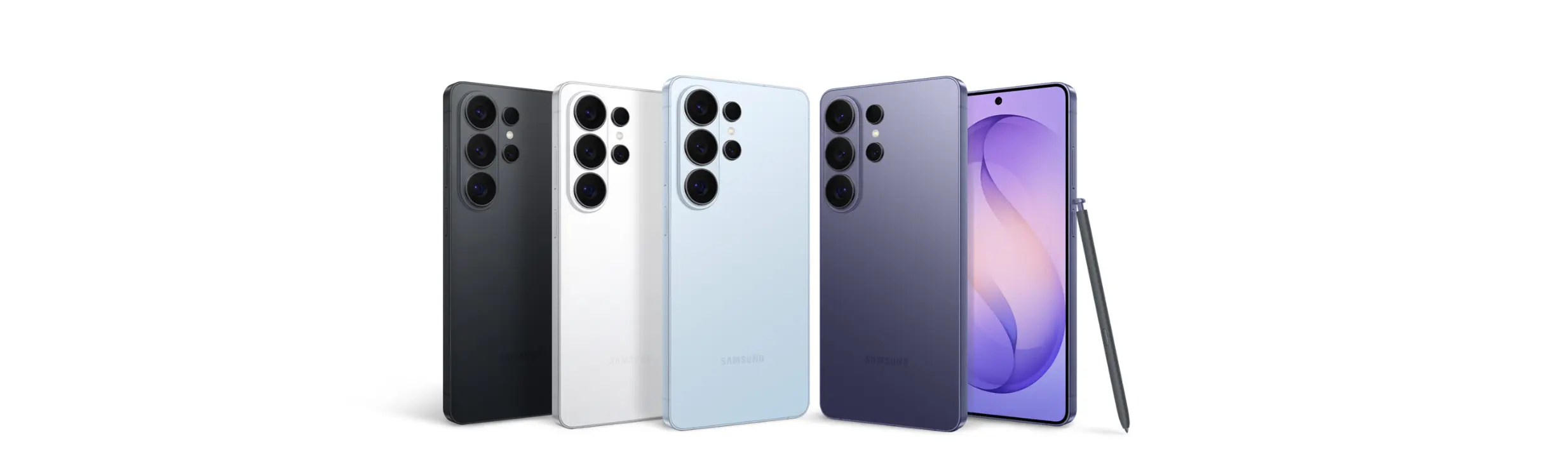
Cover image credits: Samsung.com
For years, smartphones have competed on numbers: more megapixels, faster chips, brighter displays. The Samsung Galaxy S26 Ultra starts from a different premise—one that feels increasingly relevant: how private is the device we use more than any other?
Samsung’s answer is the Privacy Display, a feature that doesn’t transform how a phone works, but quietly redefines where and how it can be used.
A Screen That Narrows the Audience
The Privacy Display reduces viewing angles so that content remains visible only to the person holding the phone directly in front of them. From the side, the screen appears dim or unreadable. Unlike traditional privacy filters, it can be activated selectively—only for certain apps, like banking, email or messaging.
It is a thoughtful addition for life in public spaces: trains, airports, shared offices. But it comes with trade-offs. The technology slightly softens image clarity and can make text appear less sharp. Over time, some users may notice increased eye strain.
It is a familiar technological compromise: more security, at the cost of visual purity.
Display Excellence, With New Questions
Beyond privacy, the display remains a core strength. The 6.9-inch LTPO AMOLED panel supports a 1–120 Hz refresh rate and reaches peak brightness levels high enough for comfortable outdoor use.
Yet the technical choices reveal a degree of conservatism. The panel is still natively 8-bit, using software techniques to simulate 10-bit color. In isolation, the difference is minor. In context, it suggests Samsung is prioritizing consistency over specification leadership.
More telling is the growing emphasis on visual comfort. The device’s PWM dimming, still set at 480 Hz, may cause discomfort for sensitive users in low-light conditions. Increasingly, buyers appear to care less about theoretical color depth and more about how a display feels over hours of use.
Familiar Design, Subtle Shifts
The design follows a well-established formula: flat edges, clean lines, a large but manageable form factor. At 7.9 mm thick and 214 grams, the device is slightly thinner and lighter than its predecessor.
Samsung has also stepped back from titanium, returning to aluminum. The change is practical—likely tied to cost and thermal efficiency—but noticeable in hand.
The camera module, meanwhile, continues to expand, making the device unstable when placed on flat surfaces. It is a small but persistent usability issue in an otherwise refined design.
Performance That Exceeds Demand
Powered by the latest Snapdragon chip, the Galaxy S26 Ultra delivers more performance than most users will ever need. Everything is fast, fluid and reliable, from everyday tasks to intensive workloads like 4K video editing.
Battery life is solid but no longer exceptional. The 5,000 mAh capacity lasts a full day, though competitors are beginning to push further. Charging speeds have improved, but remain short of industry-leading.
Performance, in other words, is no longer the defining question.
Photography Becomes Creation
The camera system remains among the most capable in its class, anchored by a 200-megapixel main sensor and an improved zoom system. Image quality is consistently strong, with more natural color processing than in previous generations.
But the more significant shift is in software.
Artificial Intelligence as Infrastructure
On the Galaxy S26 Ultra, artificial intelligence is not a feature—it is a layer that runs through the entire device.
Tools like Photo Assistant and Creative Studio allow users to edit images using natural language. Objects can be reconstructed, lighting conditions altered, multiple images combined into one. What once required technical skill can now be done with simple instructions.
More importantly, much of this processing happens on-device. This reduces reliance on cloud services, speeds up performance and keeps sensitive data local.
It also aligns with the phone’s broader philosophy: privacy is not just about what others can see on your screen, but how your data is handled behind it.
A Slow Start, Then Strong Demand
Initial reactions to the device were muted. The updates felt incremental, the innovations understated.
But the market responded differently. Following early price reductions, the Galaxy S26 Ultra quickly became one of the best-selling smartphones in its segment, accounting for nearly 30 percent of purchases among tech consumers in March.
It is a familiar pattern for Samsung: less early excitement, more sustained trust.
A More Mature Flagship
The Galaxy S26 Ultra is not a radical departure. It does not attempt to redefine the category.
Instead, it reflects a more mature phase of the smartphone market—one where refinement matters more than spectacle, and where user experience extends beyond performance and camera quality.
Privacy, comfort and intelligent software integration are becoming central concerns.
In that sense, the Galaxy S26 Ultra may not be the most dramatic phone of the year. But it is one of the clearest indications of where high-end smartphones are heading: away from visible innovation, and toward something quieter, but more essential—trust.