



Add as Preferred Source on Google
For more than a decade, the smartwatch industry has followed a predictable path: bigger displays, more notifications, more apps and more reasons to look down at the wrist. Garmin’s new CIRQA Smart Band takes the opposite approach. It removes the screen entirely and argues that the future of wearable technology may not be about seeing more, but about being interrupted less.
The CIRQA is Garmin’s first screenless fitness tracker, a device designed to quietly collect health and training data around the clock while leaving the interpretation to the smartphone. At 199,99€, it enters a category largely shaped by Whoop and increasingly contested by Fitbit, Polar and Amazfit. But Garmin’s biggest challenge is not the hardware. It is convincing consumers that a premium wearable can still be valuable when the device itself shows almost nothing.
The idea behind CIRQA is simple: wear it, forget about it, and check the results when they matter.
That philosophy reflects a broader shift in consumer technology. After years of adding more digital information to every surface, from phones to watches to cars, some users are beginning to look for devices that demand less attention. Smart rings, screenless bands and minimalist trackers are all built around the same promise: technology that works quietly in the background rather than competing for focus.
Garmin’s advantage is that it already owns one of the deepest health and training ecosystems in the industry.
A Garmin watch without the watch
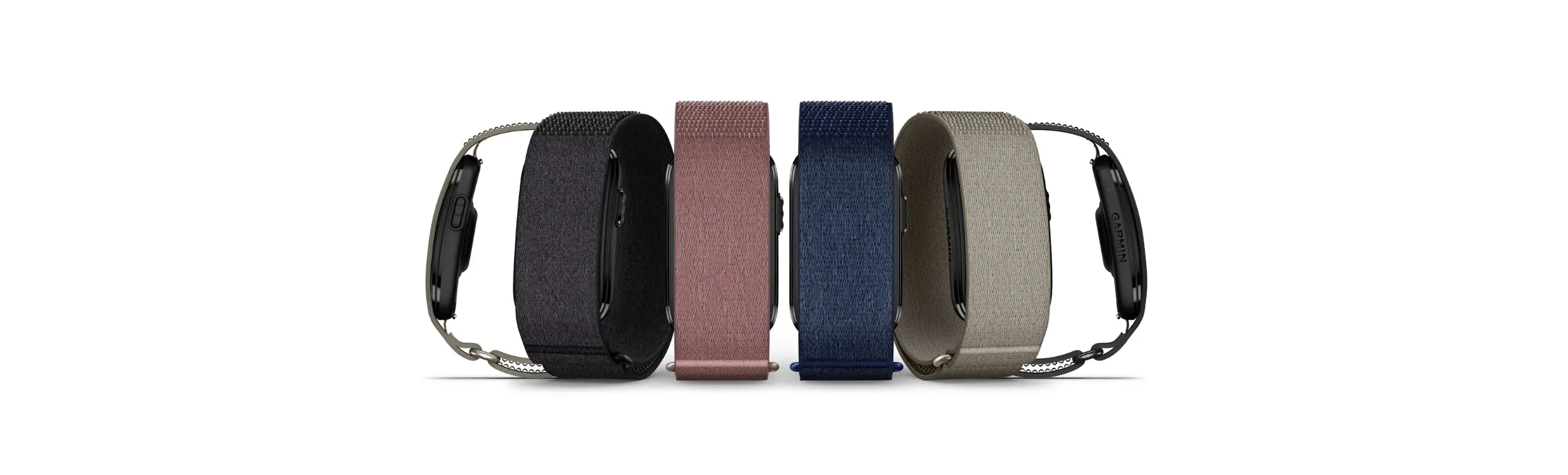
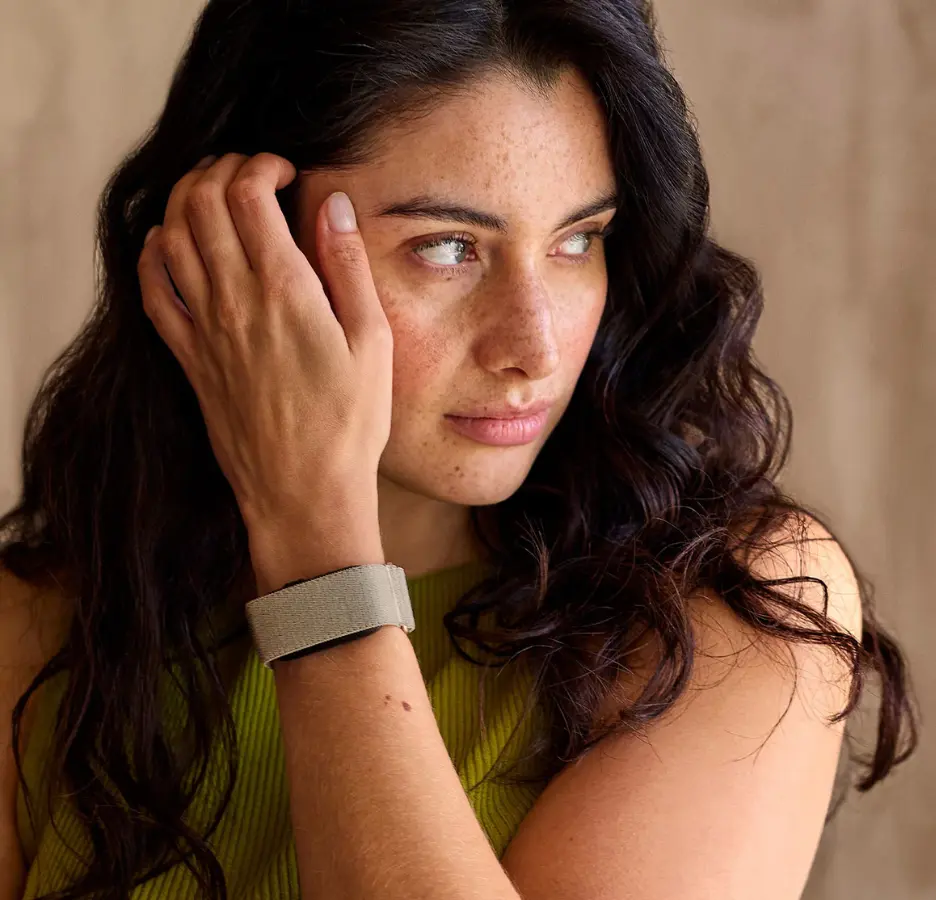
The CIRQA Smart Band looks deliberately simple. Instead of a traditional smartwatch body, it uses a compact sensor module attached to a fabric band designed for continuous wear. It can be worn on the wrist or positioned higher on the arm, depending on the activity or personal preference.
The absence of a display is not a compromise by accident. It is the product’s central idea.
There are no notifications, no watch face and no constant stream of metrics demanding attention. Every piece of information is collected and later analyzed inside Garmin Connect, the company’s established health and fitness platform.
The device tracks the core measurements expected from a modern wellness wearable: continuous heart rate, heart rate variability, stress levels, respiration, Pulse Ox blood oxygen measurements, skin temperature and Garmin’s Body Battery energy estimation.
At night, CIRQA becomes a dedicated recovery tracker. It analyzes sleep duration and stages, provides a Sleep Score, monitors overnight heart rate variability, tracks breathing patterns and detects daytime naps.
The result is a device that behaves less like a smartwatch and more like a personal health sensor.
The no-subscription argument
CIRQA’s most aggressive move is not its design. It is its business model.
The screenless wearable category has increasingly been defined by recurring payments. Whoop built much of its identity around advanced recovery analysis and a subscription-based ecosystem. The hardware is only part of the relationship; continued access to the data requires an ongoing membership.
Garmin is making a different argument: users should buy the device once and keep access to the information it collects.
The company does offer Garmin Connect+, a separate paid service that adds features such as additional coaching tools and enhanced views, but the core CIRQA experience does not require a monthly fee.
That distinction could become the product’s strongest selling point. Fitness technology has reached a moment where consumers are not only comparing features, they are comparing ownership models.
A 199€ device that continues working years later represents a very different proposition from a cheaper tracker that becomes increasingly expensive over time.
Serious training data inside a minimalist band
Although CIRQA looks closer to a lifestyle accessory than a sports watch, Garmin has not abandoned its athletic roots.
The band supports more than 80 activity profiles, including running, walking and yoga. Users can start an activity manually through a physical button or allow the system to recognize certain workouts automatically.
The data collected feeds into Garmin’s existing performance ecosystem. Features such as Training Readiness, VO2 max estimation, HRV Status, Training Status, workout benefits and recovery time calculations bring many of the same analytical tools found on Garmin’s more expensive sports watches.
This is where CIRQA separates itself from many competitors. The device may have no screen, but it still benefits from years of Garmin’s experience analyzing endurance training.
The company’s message is clear: the value is not on the wrist display. The value is in the interpretation of the data.
The compromises behind the minimalist design
Removing the screen creates advantages, but it also means accepting limitations.
CIRQA does not include built-in GPS. For accurate route tracking during runs, walks or cycling sessions, it relies on a connected smartphone’s GPS system.
That approach helps preserve battery life and keeps the device smaller, but it also means athletes who prefer completely independent tracking will still need a traditional sports watch.
The device also uses Garmin’s Elevate 4 optical heart rate sensor rather than the newer Elevate 5 platform found in some premium Garmin models. That choice helps control costs, but it places CIRQA below Garmin’s highest-end hardware.
For many users, however, the trade-off may be acceptable. The company is not positioning CIRQA as a replacement for a Fenix or Forerunner. It is creating a different category: a Garmin health and recovery device that disappears into daily life.
Can Garmin challenge Whoop?
Calling CIRQA a “Whoop killer” would be easy, and probably inaccurate.
Products rarely win markets simply because they have better specifications. Marketing, community and brand identity matter just as much.
Whoop has built a strong relationship with athletes, influencers and celebrities. Fitbit has historically been effective at reaching mainstream consumers. Garmin, despite its dominance among serious athletes, has often relied more on technical credibility than lifestyle marketing.
CIRQA solves Garmin’s product gap. The remaining question is whether the company can solve the awareness gap.
Where Garmin has an advantage is data depth. The company’s training analytics are among the strongest available, and the integration with Garmin Connect gives CIRQA immediate access to an ecosystem developed over years.
Where competitors still have an edge is simplicity. Whoop’s recovery and strain dashboards are designed around a very clear daily narrative. Garmin often provides more information, but sometimes requires users to work harder to understand it.
The battle may not be about who has the most data. It may be about who explains that data best.
The return of invisible technology
CIRQA arrives at a moment when wearable technology is becoming less visible rather than more.
The first generation of smartwatches convinced consumers to put computers on their wrists. The next generation may convince them that the best technology is the kind they barely notice.
Garmin’s new band represents a reversal of the industry’s obsession with screens. It suggests that the future of personal technology may not be a constant flow of information, but a quieter relationship with data.
The CIRQA Smart Band will be available from July 24 at 199,99€. Its success will depend on whether consumers believe the most advanced wearable is the one that shows them everything — or the one they forget they are wearing.