



Add as Preferred Source on Google
At Google I/O 2026, the company unveiled dozens of new artificial intelligence products, software updates and ambitious infrastructure plans. But among all the announcements, one stood out as a clearer signal of where Google believes AI is heading next.
It was called Gemini Omni.
The new family of models, introduced by Google as part of its expanding Gemini ecosystem, is designed to generate and edit video using natural language prompts. The company describes it as a step toward so-called “world models”: systems meant not only to generate convincing media, but also to simulate how the physical world behaves.
That phrase has become common in the AI industry, often used loosely. But the demonstrations Google showed on stage suggested a more concrete ambition: not merely creating realistic video, but making even fantastical transformations appear physically believable.
The first publicly available version is called Gemini Omni Flash. And unlike earlier AI video generators, its most significant feature may not be generation at all.
It is editing.
A Video Model That Remembers
Most generative video systems today work like sophisticated vending machines: users type a prompt, receive a clip and start over if they want changes.
Omni approaches the process differently.
A user can begin with a real video, request modifications conversationally and continue refining the same scene over multiple steps without losing continuity. Characters maintain their identity, objects remain consistent and the environment preserves memory of previous edits.
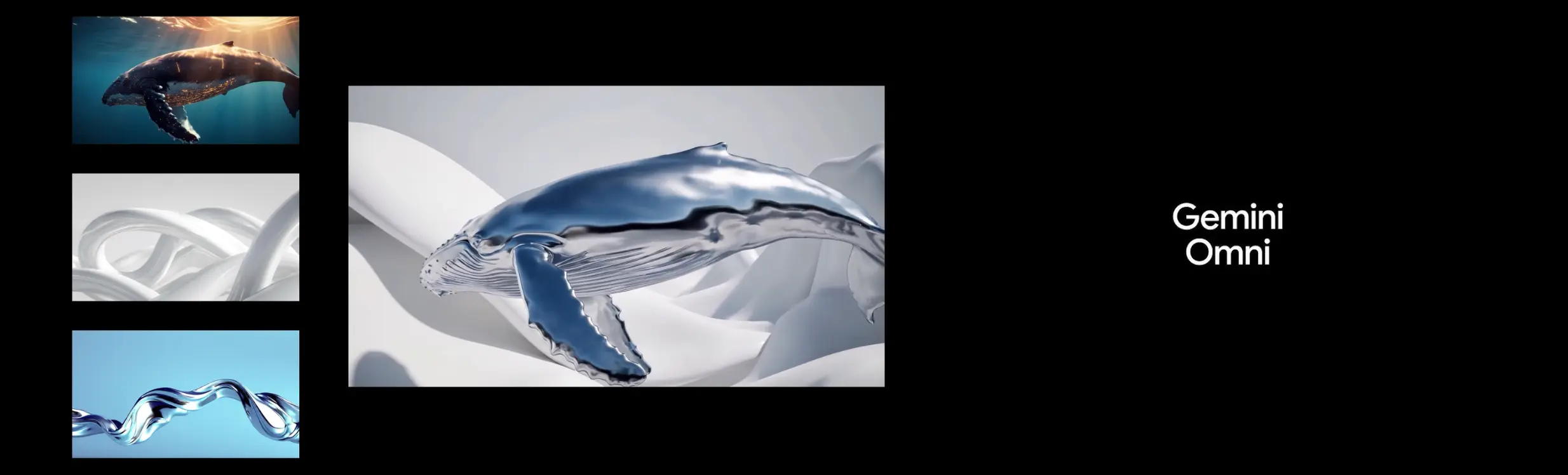
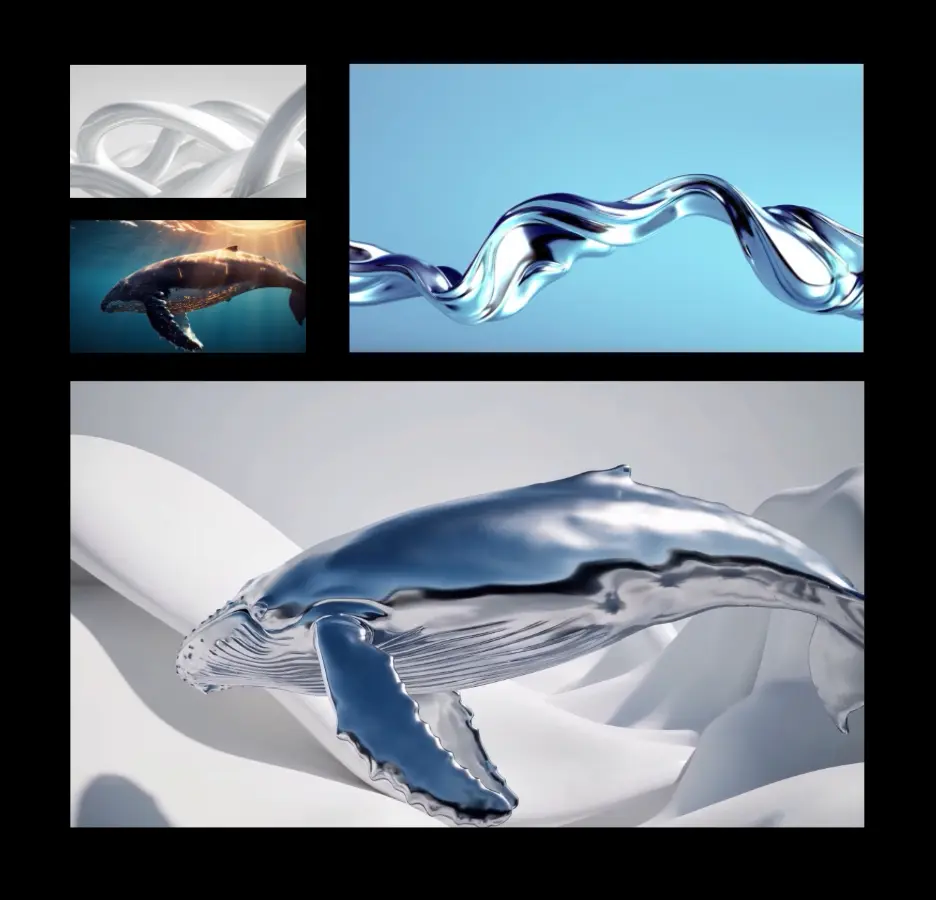
In one demonstration, a person touched a mirror that then rippled like liquid while the person’s arm transformed into reflective metal. In another, a sculpture was converted into bubbles without altering the surrounding scene.
The individual effects were impressive, but not entirely new. What appeared different was the coherence. Omni treated each modification as part of an evolving scene rather than as a freshly generated clip.
Google internally compared the system to “Nano Banana for video,” referencing its image editing model that became widely used for detailed photo manipulation.
The comparison is revealing. Omni does not simply create video from prompts. It treats video as material that can be reshaped.
One Model for Text, Audio, Images and Video
Google says Omni’s architecture is fundamentally different from previous multimedia systems.
Until now, the company relied on separate models for separate tasks: Veo for video generation, Imagen for images, specialized systems for speech and audio. Omni merges those capabilities into a single multimodal model capable of processing text, audio, images and video simultaneously.
In practice, a user can provide a photo, a voice recording, a reference clip and written instructions, and Omni will generate a coherent video that blends all of them together.
According to Google, this unified architecture allows the system to synchronize sound, motion and scene dynamics more naturally because all elements are generated together instead of stitched together in separate stages.
A falling glass, the sound of its impact, the reflections on nearby surfaces and the movement of the camera emerge from the same inference process.
That technical distinction may sound abstract. But it helps explain why the demonstrations appeared noticeably smoother than earlier generations of AI video.
Teaching AI the Logic of Physics
One of the recurring themes during the keynote was physics.
Google executives repeatedly referred to gravity, kinetic energy and fluid dynamics — concepts that until recently were rarely mentioned in consumer AI presentations.
Omni is designed not only to imitate the appearance of the world, but also to approximate how the world behaves.
The company showed clips featuring bouncing objects, flowing liquids and complex interactions between moving elements. Online observers quickly focused on what has become an informal benchmark in generative video circles: food interaction.
Early AI-generated videos frequently struggled with scenes involving eating, especially the coordination of mouths, hands and objects. One famously awkward AI clip of Will Smith eating spaghetti became an internet meme precisely because the motion looked so unnatural.
In leaked demonstrations of Omni, similar scenes appeared substantially more convincing.
The system is far from flawless. Some early testers reported inconsistencies in trajectories and object motion. But compared with the distorted outputs common only a few years ago, the improvement is unmistakable.
Google Wants Video Creation to Feel Conversational
The most immediate home for Gemini Omni is Google Flow, the company’s AI creative studio introduced last year.
Inside Flow, Omni can edit scenes while preserving visual continuity, character identity and environmental consistency across multiple shots. That capability matters particularly for creators working on longer sequences rather than isolated clips.
Google also announced Flow Agent, an AI assistant designed to propose creative ideas, generate variations, organize assets and apply edits across projects.
Another feature, called Flow Tools, allows users to create custom workflows (including editors, shaders and upscaling systems) using natural language.
The broader strategy is becoming increasingly clear.
Google no longer appears interested in AI video as a standalone tool. Instead, the company is trying to fold media generation into a larger conversational workspace where creation, editing and automation happen together.
Gemini Is Becoming Google’s Central Interface
Omni was only one part of a much larger presentation focused on what Google calls “agentic AI.”
During his keynote, Sundar Pichai, Google’s chief executive, emphasized the scale of adoption across the company’s AI platforms. Google said its AI-powered Search experience now exceeds one billion monthly active users, while the Gemini app has surpassed 900 million monthly users.
The company also said that more than 8.5 million developers use Google AI models each month.
Behind those numbers is an equally aggressive infrastructure push.
Google plans to spend roughly $190 billion annually in capital expenditures, up dramatically from the $31 billion it reported in 2022. Much of that investment is tied to new generations of Tensor Processing Units, the company’s custom AI chips designed specifically for training and inference workloads.
Seen in that context, Omni is not a standalone product announcement. It is part of a broader effort to turn Gemini into the operating layer through which users interact with text, voice, video and software automation.
The Trust Problem
Google also appears aware of the risks.
Every video generated with Omni includes both SynthID (the company’s invisible watermarking technology) and C2PA provenance credentials, an emerging industry standard designed to certify the origin and modification history of digital content.
The company has also withheld one of Omni’s most controversial capabilities from public release: editing the voice inside existing videos.
Google says the feature already works internally but was considered too risky at launch because of concerns surrounding impersonation and misinformation.
For now, users can generate speech only through AI avatars created from their own verified voice recordings.
The decision reflects a more cautious approach than some competitors have taken in the race toward photorealistic AI media.
For Now, the Videos Are Only Ten Seconds Long
There are still obvious limitations.
Videos generated by Gemini Omni Flash are currently capped at 10 seconds. Google describes that limit as a product decision rather than a technical constraint, arguing that short-form formats remain the dominant use case for platforms like YouTube Shorts, TikTok and Instagram Reels.
Omni Flash is available through the Gemini app, Google Flow and YouTube Shorts for subscribers to Google AI Plus, Pro and Ultra plans. API access for developers is expected in the coming weeks.
Google has also confirmed the existence of a more advanced version, Gemini Omni Pro, though no release date has been announced.
The Larger Shift
The most important part of Gemini Omni may not be the quality of its videos.
Competitors will eventually match many of those capabilities.
What feels more consequential is the change in workflow.
For years, generative AI has been fragmented into separate systems: one model for writing, another for images, another for video and yet another for audio.
Omni attempts to collapse those boundaries into a single conversational process.
Users are no longer expected to operate specialized creative software. Instead, they interact with a model capable of understanding scenes, sound, visual references and iterative changes within one continuous context.
That may ultimately be Google’s larger ambition.
Not simply building better video generators, but turning media creation itself into an ongoing conversation with an AI system capable of transforming vague ideas into finished visual experiences.