




If you're in a hurry:
- Apple is expected to push the iPhone past 5,000 mAh for the first time with the iPhone 18 Pro Max.
- The move reflects rising power demands from AI features and always-on services.
- New chips and modems aim to improve efficiency alongside larger batteries.
- Battery life is emerging as a central priority, even at the cost of slimmer designs.
- The shift to eSIM-only designs helps free internal space and streamline hardware.
Over the past few years, Apple has followed a remarkably consistent philosophy when it comes to batteries. Rather than chasing ever-larger capacities, the company has relied on tight integration between hardware and software to deliver what it considers acceptable real-world battery life. It is an approach that has often paid off, particularly when compared with Android devices, where bigger batteries do not always translate into longer daily use.
That strategy, however, may be entering a new phase. Not because Apple intends to compete with Chinese manufacturers now experimenting with batteries approaching 10,000 milliamp hours, but because the technological demands placed on smartphones are changing — and becoming harder to ignore.
Only Port-In
5G Max speed 2 Gbps
5G Portin 599
150GB in 5G Data
€5.99 /30 Days
Crossing the 5,000 mAh threshold
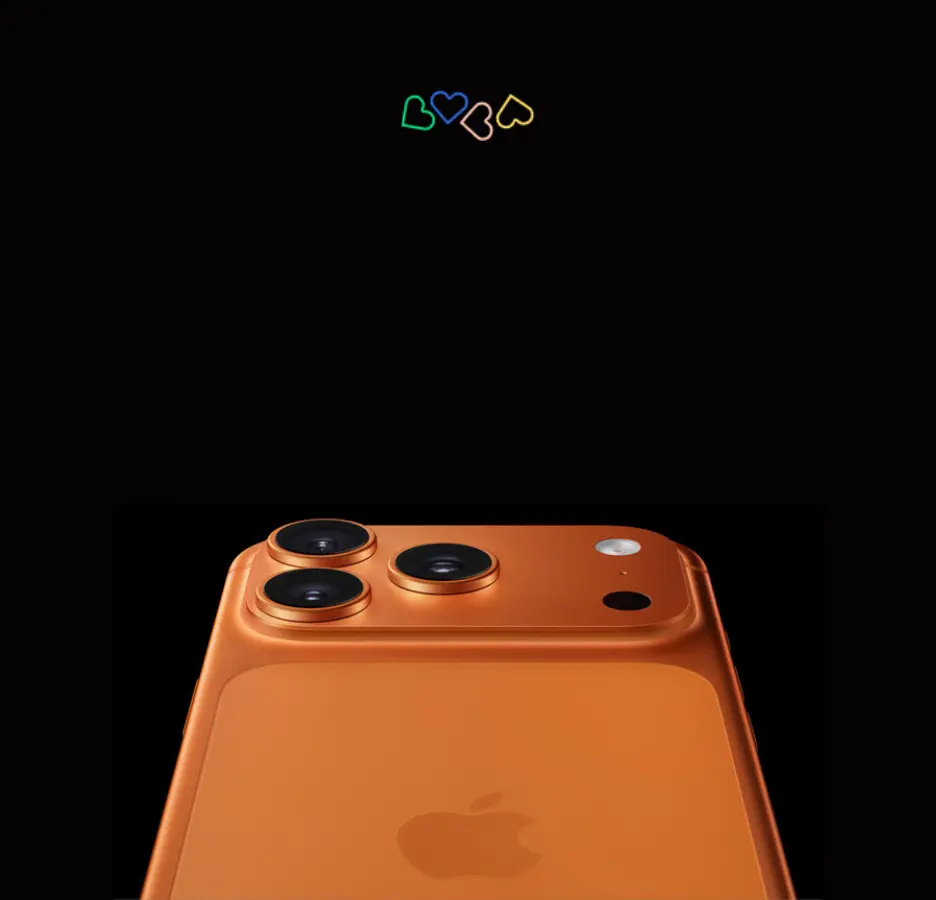
According to a growing body of reports, the iPhone 18 Pro Max is expected to become the first iPhone to surpass the 5,000 mAh mark. The information comes from Digital Chat Station, a well-known Chinese leaker with a strong track record of accurate supply-chain disclosures. The battery capacity is said to fall between 5,100 and 5,200 mAh, up from the 4,823 mAh battery found in the current iPhone 17 Pro Max.
In absolute terms, those figures are unremarkable in today’s smartphone market. But for Apple, they represent a notable shift. It would be the most significant expansion of battery capacity the company has made in years, and a tacit acknowledgment that efficiency gains alone may no longer be sufficient.
The reported increase appears to be driven by two converging factors. The first is the introduction of Apple’s next-generation A20 Pro chip, expected to be manufactured using a 2-nanometer process and designed for improved energy efficiency. The second is the growing computational burden of on-device artificial intelligence features, which rely on continuous background processing and place new, sustained demands on power consumption.
Why eSIM Matters More Than It Seems
Another, quieter shift concerns the SIM card itself. Apple has been steadily moving toward eSIM-only designs, beginning in the United States and gradually expanding to other markets. With the iPhone 18 generation, that transition could accelerate. Eliminating the physical SIM tray frees up internal space — modest, but meaningful — that can be reallocated to components like the battery or cooling system, while also simplifying water resistance and internal layout. The move has not been without friction, particularly in regions where carrier support for eSIM remains uneven. Still, Apple appears committed to the transition, viewing eSIM not just as a design choice but as part of a longer-term strategy to streamline hardware and exert tighter control over the connectivity stack.
A heavier phone, by design
A larger battery almost inevitably brings trade-offs. For months, industry rumors have suggested that the iPhone 18 Pro Max could be slightly thicker and heavier than its predecessor, potentially weighing more than 240 grams. If confirmed, that would mark a subtle but meaningful departure from Apple’s long-standing emphasis on thinness and lightness.
The shift would reflect a broader recalibration of priorities. As smartphones have become indispensable tools for work, navigation, media consumption and communication, endurance — not slimness — has emerged as one of the most frequently cited user concerns. Apple is reportedly working to reorganize internal components to minimize changes to the phone’s external dimensions, but some increase in size now appears increasingly likely.
A new angle in the rivalry with Samsung
An iPhone with a battery exceeding 5,000 mAh would also carry symbolic weight in Apple’s long-running competition with Samsung. The Korean company’s Galaxy Ultra models have traditionally emphasized autonomy and versatility, and the upcoming Galaxy S26 Ultra is expected to retain a battery capacity of around 5,000 mAh.
If the reports prove accurate, Apple could edge ahead numerically in a category where Samsung has long been perceived as stronger. Whether that translates into a real-world advantage would depend on the familiar Apple formula: how effectively hardware, software and system services are tuned to work together. Samsung, meanwhile, would likely continue to hold advantages in areas such as fast charging, long-range optical zoom and deep system customization.
Efficiency beyond the battery
Battery size is only part of the story. The iPhone 18 lineup is also expected to debut Apple’s new in-house C2 modem, following earlier iterations that already showed improvements in energy management. The C2 is rumored to offer more efficient transitions between cellular, Wi-Fi and satellite connections, further reducing unnecessary power drain.
Taken together — a larger battery, a more efficient chip and a refined modem — the picture that emerges is evolutionary rather than revolutionary. Apple appears to be reinforcing the foundations of battery life rather than redefining the smartphone outright.
The foldable factor
The iPhone 18 Pro Max may not be alone in crossing the 5,000 mAh threshold. Reports also point to Apple’s long-anticipated foldable iPhone, which could arrive as early as 2026 or 2027, featuring a battery capacity of around 5,500 mAh.
Apple has reportedly approached the foldable category with caution, focusing on durability, display quality and hinge reliability — areas that have challenged competitors. Those engineering hurdles are believed to be a key reason the company has waited longer than rivals to enter the market.
Satellite connectivity, reimagined
Another area where the iPhone 18 Pro models could break new ground is satellite communication. What began as an emergency-only feature may soon become a more integrated part of everyday connectivity. With the C2 modem, Apple is said to be working toward seamless switching between terrestrial networks and satellites, enabling services like mapping, weather updates and messaging in remote areas.
There is also speculation that Apple may open satellite access to third-party apps and explore partnerships with satellite providers, including possible discussions around direct-to-cell technology. These developments remain unconfirmed, but they point to a future in which being “off the grid” no longer means being disconnected.
A quieter evolution for the iPhone 18 Air
Not all models in the iPhone 18 lineup are expected to see dramatic changes. The iPhone 18 Air is rumored to retain the same OLED display technology used in the previous generation, with Apple opting to delay more advanced manufacturing processes until costs and yields improve.
Instead, the focus would be on incremental refinements: improved speakers, a dual-camera system and continuity in suppliers, with Samsung Display and LG Display remaining central partners.
A subtle but meaningful shift
Taken as a whole, the iPhone 18 does not appear poised to redefine the look of the smartphone. There are no signs of radical design changes or eye-catching visual departures. Yet beneath the surface, Apple may be making one of its most consequential adjustments in years.
As artificial intelligence features become persistent rather than occasional, and as connectivity expands beyond traditional cellular networks, battery life is no longer a secondary specification. It is a prerequisite. And for the first time in a long while, Apple seems ready to acknowledge that meeting this new reality requires not just better optimization — but more power as well.