




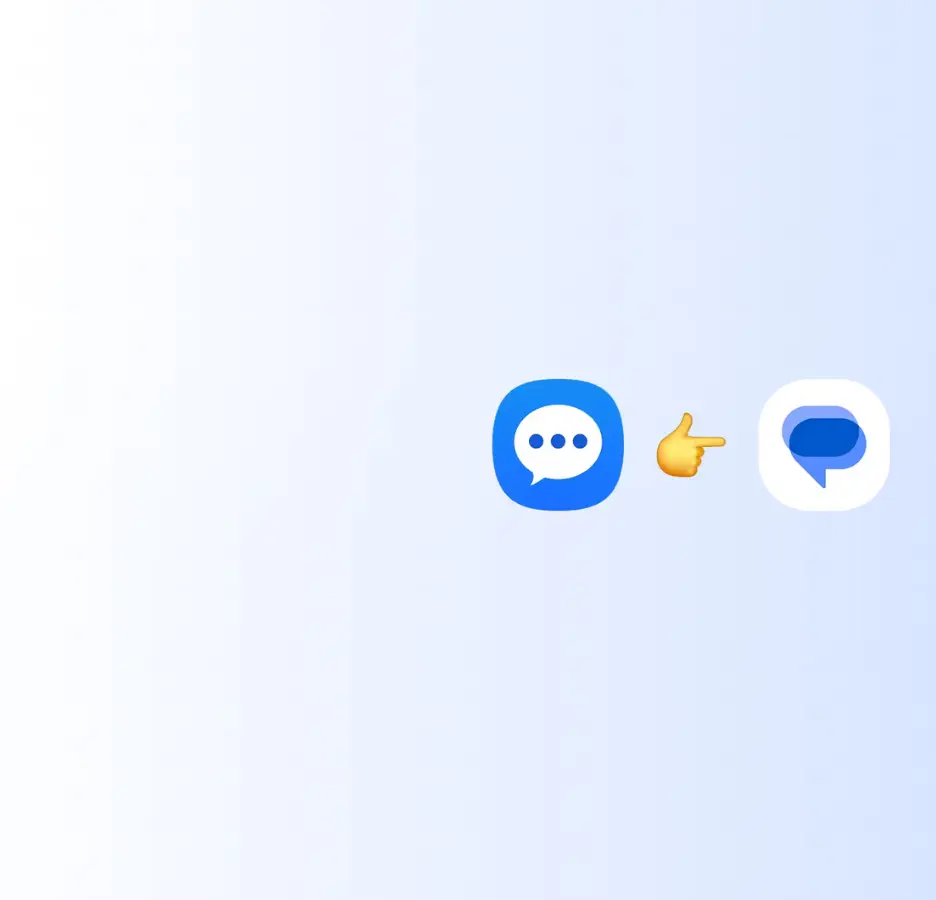
There is now a date — July 2026 — that marks a quiet but significant shift for millions of Samsung smartphone users. From that point on, Samsung Messages will no longer function as a messaging app in any meaningful sense. For many Galaxy owners, it will bring to an end a habit that has lasted more than a decade, dating back to the earliest days of Samsung’s smartphones.
The decision is neither abrupt nor unexpected. It represents the final step in a transition that has been underway for years, one that increasingly aligns Samsung with Google Messages, which is set to become the default messaging platform across Android devices.
Only Port-In
5G Max speed 2 Gbps
5G Portin 599
150GB in 5G Data
€5.99 /30 Days
A Shutdown That Is Gradual, but Final
When support ends, Samsung Messages will not immediately disappear from devices, but it will effectively stop working. Users will no longer be able to send or receive messages, with a narrow exception for emergency numbers and designated emergency contacts. Beyond that, the app will become unusable.
At the same time, it will be removed from the Galaxy Store and will no longer be available for download — a process that has already begun on newer devices, including those in the Galaxy S26 lineup.
The change primarily affects devices running Android 12 or later, which account for the majority of active Galaxy phones. Older models running Android 11 or earlier will continue to support the app, likely due to compatibility constraints with newer alternatives.
The End of a Long Transition
What is happening in 2026 is the culmination of a strategy that began several years ago. As early as 2021, Samsung started promoting Google Messages as the default messaging app on select devices. In the years that followed, it gradually stopped preinstalling its own application.
On more recent models, including the Galaxy S25 and S26, Samsung Messages is already absent or unavailable. The upcoming shutdown is less a disruption than the formal conclusion of a transition designed to be incremental and largely unnoticed.
How the Switch Will Work
Samsung plans to guide users through the change directly from within the app. Notifications and step-by-step prompts will direct them toward Google Messages, with a process that is designed to be straightforward: install (or open) the app and set it as the default.
On newer devices, the transition will be even more seamless. The Google Messages icon may automatically replace Samsung Messages on the home screen, minimizing any disruption to established habits. Existing SMS and MMS histories will be preserved, without requiring manual backups or transfers.
What Will Actually Change for Users
For those who still rely on traditional SMS, very little will change. Messages will continue to be sent through carriers’ networks, functioning much as they always have.
The differences become more apparent with Rich Communication Services, or RCS — the modern evolution of SMS. During the transition, some conversations may be briefly interrupted, particularly on older devices or in ongoing threads. In most cases, normal functionality resumes once both parties are using Google Messages.
Over time, the experience becomes more sophisticated: higher-quality media sharing, typing indicators, read receipts and a broader set of features that bring standard messaging closer to app-based services like WhatsApp or iMessage.
Why Samsung Is Letting Go
The decision reflects a pragmatic calculation. For years, Samsung maintained its own messaging app alongside Google’s, creating a redundancy that often confused users.
Keeping pace with newer technologies — particularly RCS and artificial intelligence — would have required continued investment. By stepping away, Samsung can redirect resources toward areas it considers more strategic, including its One UI software, foldable devices and wearable ecosystem.
The Growing Role of Artificial Intelligence
A central argument for the transition is the set of features available in Google Messages, many of which are tied to artificial intelligence. The app integrates capabilities powered by Gemini, offering suggested replies, smarter message handling and creative tools such as image editing.
It also includes increasingly sophisticated protections against spam and fraud, reflecting a broader shift toward embedding security directly into everyday communication tools.
Implications for Older Devices and Smartwatches
The shutdown will also affect Samsung’s older smartwatches running Tizen. On those devices, users will no longer be able to view full message histories, although they will still be able to read and send new messages, albeit with more limited functionality.
Older smartphones, particularly those that cannot support newer software versions, will retain access to Samsung Messages for the time being. Even so, this appears to be a temporary concession rather than a long-term exception.
Part of a Broader Shift in Android
Samsung’s move reflects a wider trend across the Android ecosystem. Increasingly, manufacturers are adopting Google Messages as a standard, in an effort to create a more consistent user experience across devices.
For Galaxy users, the transition may feel minor — a different icon, a slightly different interface. But it marks the end of a long period of fragmentation. Android is gradually moving away from parallel solutions toward a more unified platform, where core services are shared rather than duplicated.