




Add as Preferred Source on Google
For a twenty-something walking down the street today, there is something almost paradoxical in the sight of a thin cable trailing from the ear to a pocketed smartphone. Not long ago, wired headphones were supposed to be a relic—replaced, seemingly permanently, by the frictionless promise of Bluetooth earbuds.
And if asked who, in 2026, might still be using wired headphones, the answer would likely have been predictable: older users, less interested in the latest technological shifts, perhaps attached to familiar habits more than trends.
That assumption, however, underestimated Gen Z.
The unexpected comeback of wired headphones
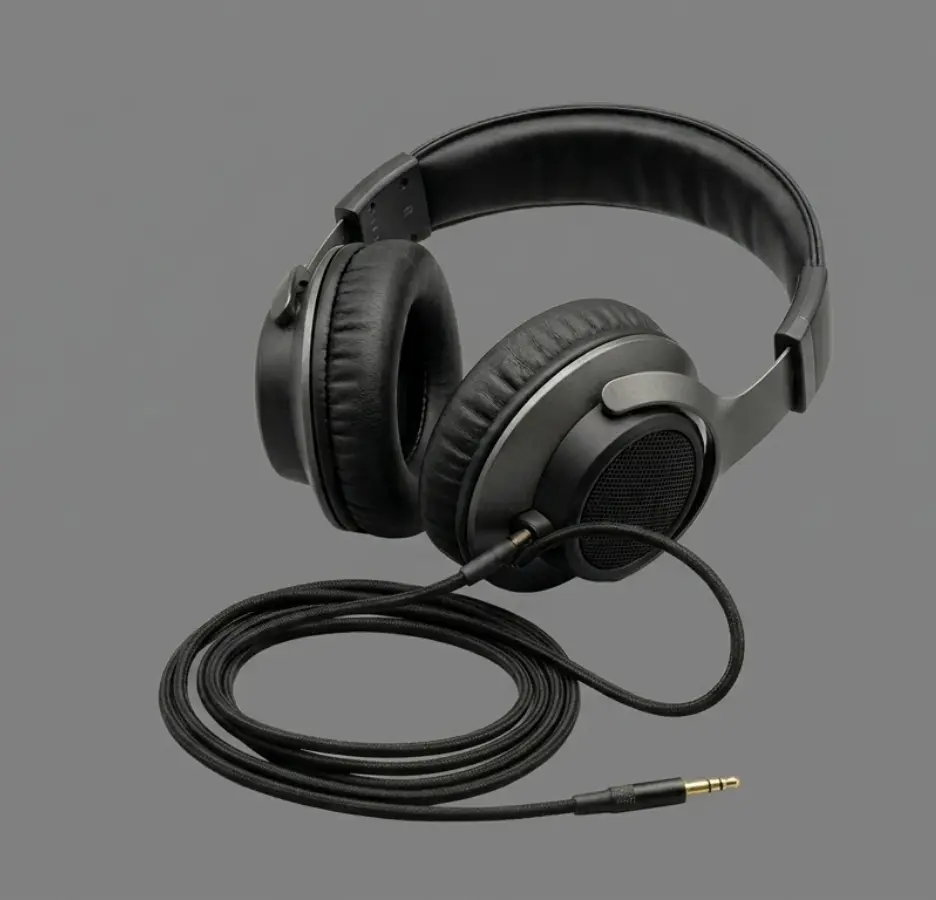
The global market for wired headphones—long considered in structural decline after the rise of true wireless earbuds—has staged a surprising rebound. Early 2026 data points to a sharp increase in sales, with some estimates suggesting revenue growth of around 20% compared to the same period a year earlier. After years of contraction, the shift is too pronounced to dismiss as a passing quirk.
It would be easy to attribute this reversal to economic pressure alone. Inflation has eroded purchasing power, particularly among younger consumers. And yet that explanation only goes so far: inexpensive Bluetooth earbuds are widely available at extremely low prices across major online platforms.
The real story appears more cultural than financial.
Digital detox, nostalgia, and the aesthetics of the “wired”
Among Gen Z and Gen Alpha, a growing fascination with “digital detox” culture has taken hold—often paradoxically amplified by social media itself. Alongside vinyl records, DVDs, and cassette tapes, wired headphones have re-emerged as part of a broader aesthetic return to analog-era objects.
These are not memories of lived experience. For many young users, the 1990s and early 2000s are not nostalgia but mythology: a time when technology felt present but not all-consuming.
When Apple removed the 3.5mm headphone jack from the iPhone in 2016, it symbolized a decisive shift toward a wireless future. AirPods came to define the new standard of listening: seamless, invisible, always connected.
Nearly a decade later, the narrative has become more complicated.
A market that tells a different story
According to industry data cited by Circana, wired headphone sales—after years of decline—began rising again in 2025, accelerating into 2026 with a reported 20% revenue increase in the first weeks of the year.
While premium wireless earbuds continue to dominate in overall value, especially in high-end segments, the idea of a single “all-purpose” listening device is fading.
Today’s usage is increasingly fragmented: wireless earbuds for travel or commuting, wired headphones for work, study, or focused listening.
Why wired still makes sense
The renewed interest in cables is not purely aesthetic. It is grounded in practical advantages that have become more visible as wireless ecosystems matured.
First, reliability. Wired headphones do not require pairing, charging, firmware updates, or battery management. They work instantly—an increasingly rare quality in consumer technology.
Second, cost. A capable pair of wired headphones is often significantly cheaper than mid- to high-range wireless alternatives, making them especially attractive in an era of subscription fatigue and rising living costs.
Third, performance. At comparable price points, wired connections can still offer lower latency and more consistent audio reproduction, a crucial factor for gaming, audio production, and content creation.
From inconvenience to style statement
Perhaps the most striking shift, however, is symbolic. What was once considered clutter has become visible identity.
Celebrities such as Zoë Kravitz, Zendaya, Lily-Rose Depp, Addison Rae, and others have been photographed wearing wired earbuds as part of their everyday aesthetic. The cable, once something to hide, now signals intentionality—an almost deliberate resistance to invisibility.
For a generation that did not grow up with the original iPod era, this is not nostalgia in the strict sense. It is visual language: a way to reference a recent past that feels both familiar and distant.
The wire is not just functional. It is expressive.
Less battery anxiety, fewer failures
There is also a quieter motivation: fatigue.
Wireless earbuds introduced convenience, but also a constant background burden—charging cases, depleted batteries, pairing issues, and occasional disconnections at inconvenient moments. Over time, these small frictions accumulate.
Wired headphones eliminate much of that overhead. No charging cycle. No forgotten case. No sudden loss of connection during a call.
The trade-off is physical limitation: you are tethered. But for some users, that constraint is precisely the point.
Not a replacement, but a coexistence
This is not a rejection of wireless technology. Bluetooth earbuds remain dominant in many contexts, especially for mobility and active use. Instead, the market appears to be settling into a dual system.
Wireless for movement. Wired for focus.
Even manufacturers are adapting. USB-C and Lightning-compatible wired models, often with built-in digital converters, now coexist with traditional 3.5mm designs, making them viable in a post-jack smartphone world.
A broader cultural shift
The return of wired headphones sits within a larger pattern: a renewed interest in physical, repairable, and less disposable technologies. From analog media to mechanical devices, consumers—particularly younger ones—are reassessing the value of permanence in an increasingly software-driven environment.
In that context, the cable is no longer just a technical detail. It becomes a statement about control, simplicity, and resistance to constant update cycles.
And so the image of a young person walking down the street with a wire trailing from their ear is no longer an anachronism.
It is a signal that the future of listening may not be entirely wireless after all.